Tuesday, June 9, 2015

"Not From Around These Parts": Persian Lamb Stew With Rhubarb

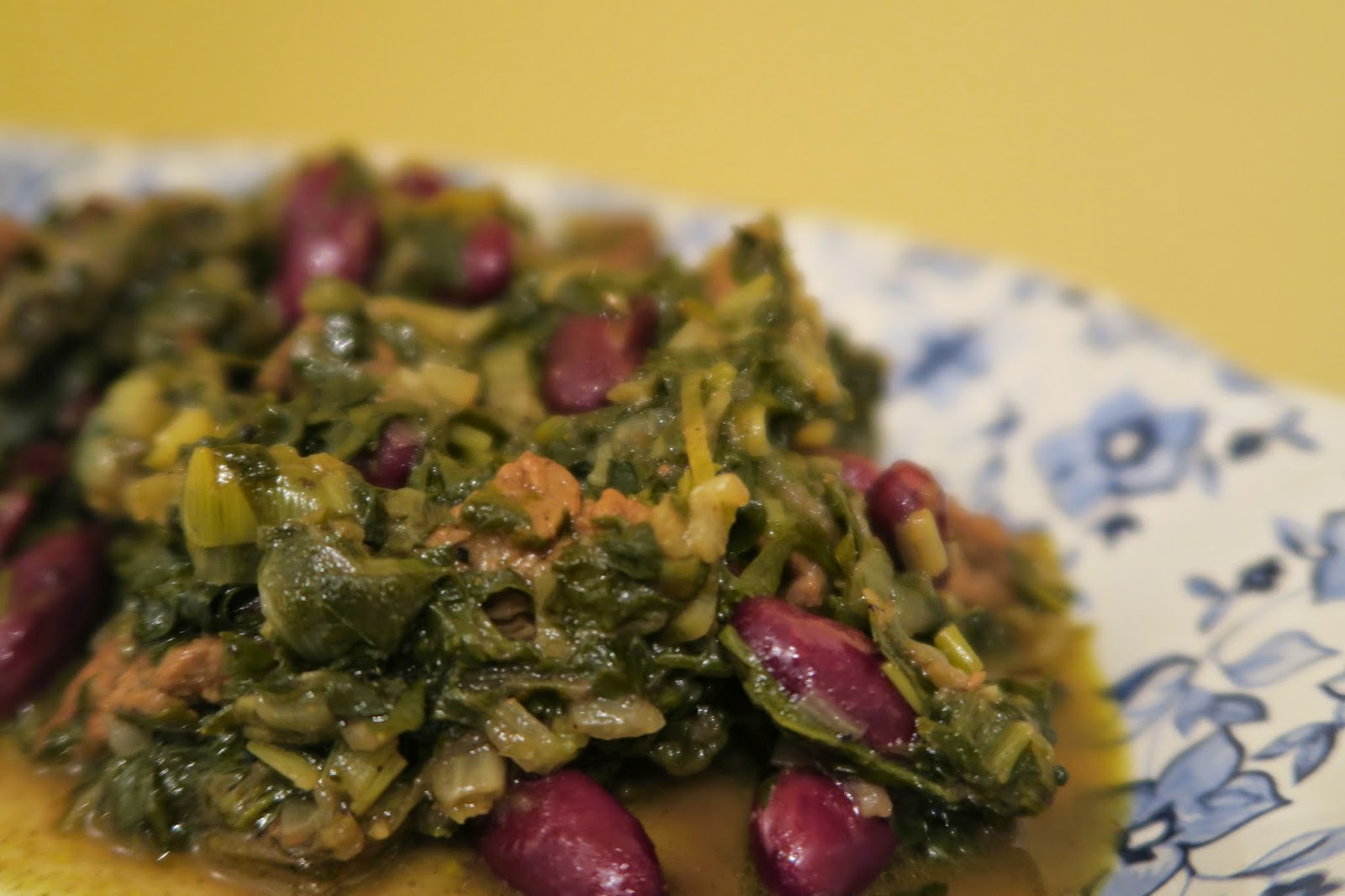
Persian Lamb Stew With Rhubarb. Photo by Mir Elias, 2015.

When I was younger and less culinarily mature, I'd frequently encounter foods that I didn't grow up with but which I loved instantly (e.g., chocolate chip cookie dough ice cream and apple pie to name a few from my unfettered youthful days of eating). Inevitably, I would say (and still do) -- Where have you been all my life? Incidentally, the same still happens with singers (Johnny Cash) and writers (P.D. James) that often other people know well but somehow I manage to encounter at just the right, rather late, moment in my life. Life arranges for its own (hopefully, pleasant) surprises, right?

The vegetable rhubarb is just such an example. I first encountered it in a Massachusetts grocery store all those years ago, and at least in the form of pie, fell in love with it deeply and instantly. It wasn't until later that I learned about its use in savory dishes like the one I'd like to share with you today. The plant itself has a long and impressive history and is quite the world traveler, which makes it a perfect ingredient for this blog. Interestingly enough, the leaves of the rhubarb found in Britain were terribly poisonous until a non-poisonous variety was introduced in 1837 to commemorate Queen Victoria's coronation!

Even the etymology of the word "rhubarb" yields fascinating information: "The name has stayed pretty much unchanged since all the way back when the Greeks named it rha barbaron, a combination of two words meaning 'not from around these parts,' appropriate for a plant that originally came from China. Barbaron is the same word that gave us barbarian, an imitation of foreign babble (like our “gobbeldygook”) that originally just meant anything non-Greek. Rha, by itself, was the even older Greek word for rhubarb (which was originally eaten more as a medicinal root than as a stalk vegetable), and comes from the ancient Greek name of the Volga river, Rha, which was itself a loan from Scythian, the ancient Persian language. But why would rhubarb be named after the Volga, a giant Russian river, of all things? Well, whoever brought rhubarbs west from China might have traveled down the eastward-stretching Volga to get to the sphere of Greek influence. Or, possibly, 'from the Volga' was just Ancient Greek shorthand for 'from the East,' making rha just another way of saying barbaron. Whatever the reason, you get the sense that the Greek guys who first set eyes on the plant had no idea what they were dealing with. After that first ancient contact, trade didn’t really pick up until the early Renaissance, and eating rhubarb didn’t become popular in Europe until sugar got cheap, around the 17th century." In Iran and Syria, the plant was widely in use by the 13th century, and the common name for rhubarb in Persian is rivas.

Wow! For someone who is not from around these parts, rhubarb certainly serves as an appropriate vegetable mascot:-)

On a more serious note, although I consider myself well assimilated to my life here, there are days when being a "barbaron" takes its toll from having difference simply exude from oneself however consciously or unconsciously one tries to either hide or own it. The best way I've heard this feeling expressed (albeit, in a different context, but which I can happily borrow for purposes of illustration) is "I'm tired of feeling like a unicorn." This is compounded by the fact that we seem to live in times when people are busy being afraid of the unicorns among them (maybe, they always have been) rather than affording them a warm welcome or at least having the courtesy to ignore the presence of horns where they don't naturally belong.

Whether you're a unicorn or a dun horse, I hope you'll enjoy this simple yet delicious recipe despite rhubarb's complicatedly cosmopolitan adventures across time and space.

I adapted this recipe (my added ingredients are italicized) for Khoresh-e Rivas or Rhubarb Stew from Mohammad R. Ghanoonparvar's Persian Cuisine, Book One: Traditional Foods, which I've referred to in this blog before.

Khoresh-e Rivas

Servings: 4-6
Cooking Time: ~2 hours (~1/2 hour for prep; ~1-1/2 hours for cooking)

  • 2 lb. stew lamb meat, cut into small to medium size pieces
  • 1 tsp ground cinnamon [I used canella instead of cinnamon]
  • ~4 Tbsp. olive oil
  • A pat of butter or clarified butter/ghee [I used the potent Bengali variety]
  • 4 large black cardamoms
  • 2 large bay leaves
  • 1 tsp. turmeric powder
  • 2 tsp. cayenne powder (or more to taste)
  • 1 pinch saffron
  • 2 tsp. nutmeg powder
  • 1 tsp. mace powder
  • ~1 cup warm water
  • 1 large onion, sliced
  • 1 bunch fresh parsley or coriander leaves coarsely chopped
  • 3-4 small stalks or 1-1 and 1/2 large stalk(s) of rhubarb chopped into inch-long pieces
  • Salt to taste

1. Heat ~2 Tbsp. olive oil in a thick bottomed pan or Dutch oven.
2. Sprinkle meat with cinnamon/canella powder and brown lightly.
3. Add cardamoms, bay leaves, turmeric and cayenne to the meat and saute for a couple of minutes.
4. Add just enough warm water to cover the meat.
5. Add saffron, nutmeg and mace and bring to a boil, then simmer on low heat covered until the meat is tender for ~40-60 minutes.
6. In a separate saucepan, sauté the onion in the remaining oil and butter/ghee until golden brown (i.e., not quite caramelized). Remove from heat and set aside.
7. Add fresh, chopped parsley or coriander to the sautéed onions and then add the mixture to the simmering meat (which should be tender by now) along with salt to taste.
8. Add the rhubarb and cook for ~10-15 minutes on low heat being careful not to stir (otherwise the rhubarb will dissolve and break like unicorns in the mist).

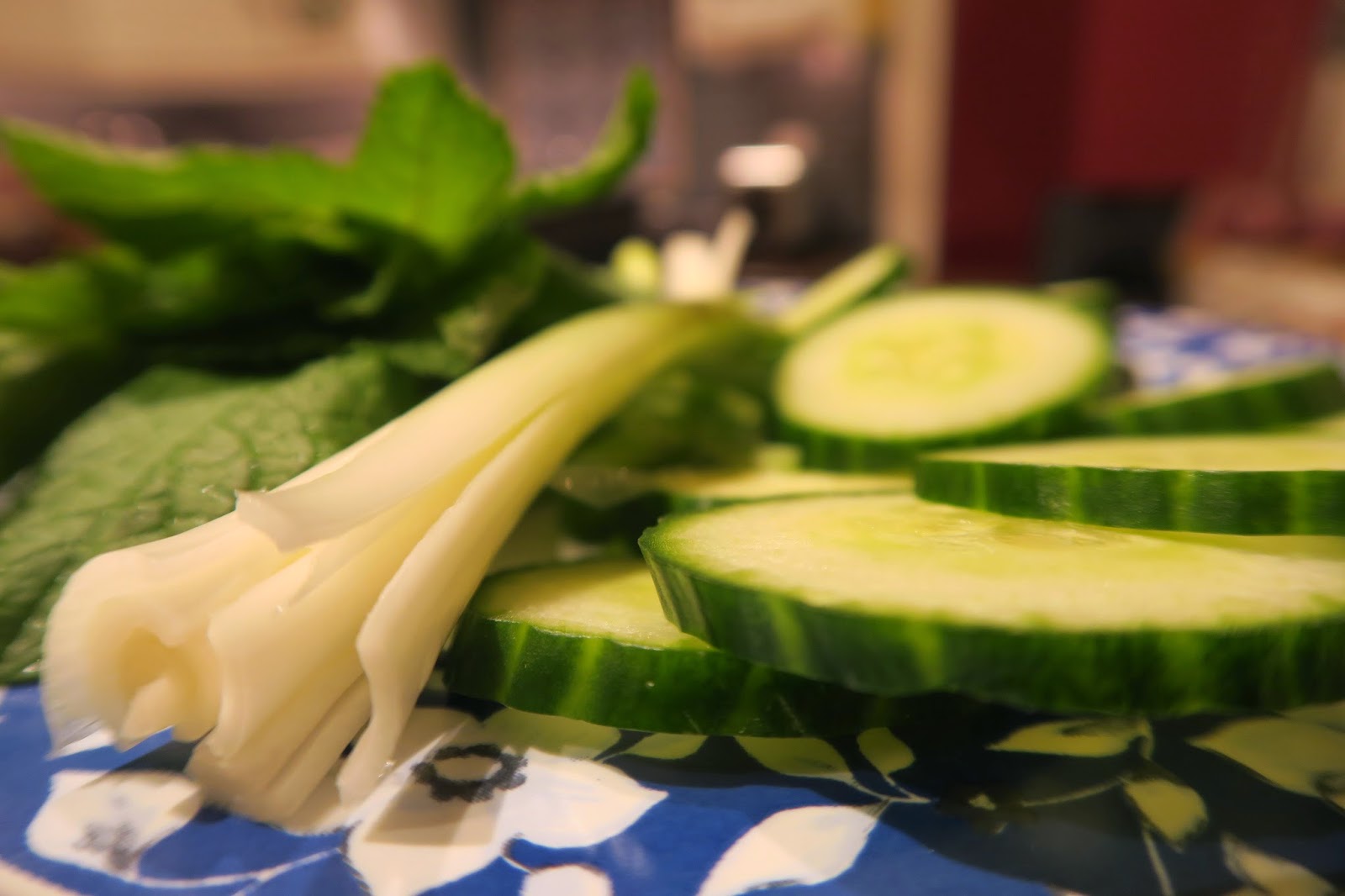
Serve with plain boiled rice and a side salad of mint, scallions and sliced cucumbers.

Buen provecho (as I learned to say in Mexico City)!

Saturday, April 18, 2015

Biryani: A Migrant's Tale


Dhakkai-Style Kacchi Biryani. Photo by Mir Elias, 2015.

"Not all those who wander are lost."

Today's post is about migration and one of the dishes from the Indian subcontinent that, for me, most evokes a migrant soul -- the biryani.

I recently read a short essay by Gary Younge writing for The Guardian where he eloquently summarizes the intangible costs of migration, borne even by relatively privileged migrants (i.e., those who leave home by their own choice, usually for educational and/or professional reasons). He says:

"Migrants, almost by definition, move with the future in mind. But their journeys inevitably involve excising part of their past. It’s not workers who emigrate but people. And whenever they move they leave part of themselves behind. Efforts to reclaim that which has been lost result in something more than nostalgia but, if you’re lucky, less than exile. And the losses keep coming. Funerals, christenings, graduations and weddings missed – milestones you couldn’t make because your life is elsewhere." And, inevitably, this makes Mr. Younge grieve "for bits of my life that had been lost. Not discarded; but atrophied. Huge, formative parts of my childhood and youth that I could no longer explain because you would really have had to have been there but without which I didn’t make much sense." 

"I didn't make much sense." I like that.

Not all wanderers may be lost but many live with the disconcerting reality that we didn’t quite make a free and unfettered choice to become a wanderer in the first place. Our wanderings were, in a sense, thrust upon us, whether by our own psychosocial makeup or by circumstances, or both. For a migrant like me (I left home when I was 17 to attend college half way across the world), observing my surroundings, writing this blog, appropriating and redefining the recipes I post here, are some of the ways in which, perhaps, I try to control, reshape, define every moment -- a survival skill of sorts for an unmoored person who has to think before answering the question “where is home” or “where would you like to be buried”. 

In search of that enigmatic state that is "more than nostalgia but...less than exile", I wanted to research the origins of biryani (a migrant dish if ever there was one, as you'll see below), compare a few recipes to perfect the best home cooking technique (still very much a work in progress), and try out my own favorite kind (but, what else) -- the Dhakkai Kacchi Biryani. In Dhaka, the Kacchi (or Raw, because raw, marinated meat is steamed/baked in parboiled rice) Biryani, when done by rock star chefs such as Fakruddin (and their culinary heirs and proteges), reaches epic heights. This dish singlehandedly helped me get through the annoying social niceties of the many weddings I was dragged to as a sulky, teenager guest.

In "Curry: A Tale of Cooks and Conquerors", Lizzy Collingham tells us about the transformation of the Persian pilau to biryani, found across Bangladesh, Pakistan and India in a variety of styles today. "In the kitchens of the Mughals...mismatched culinary cultures came together to produce a synthesis of the recipes of northern Hindustan, central Asia, and Persia." After a rocky start to this synthesis during Babur's time (Babur did not find Indian food agreeable to his more Central Asian palette and bemoaned the lack of good fruit in India), Mughlai cuisine was refined further with Persian influences brought home (along with Persian cooks) by Humayun (Babar's son) after 15 years of exile in Afghanistan and Persia. "The pièce de résistance of Persian cuisine was [and still is] pilau." In the kitchens of the next Mughal emperor, Akbar (1555-1605) the pilau underwent a transformation. While "Babur strengthened India's cultural links with central Asia and Humayun introduced Persian influences, Akbar ensured that the two were melded together with Hindustani culture to create a Mughlai culture that was a synthesis of all three....[I]n the kitchens [of Akbar]...the delicately flavored Persian pilau met the pungent and spicy rice dishes of Hindustan to create the classic Mughlai dish, biryani." Ms. Collingham includes a recipe for a Mughal-style (chicken) biryani in the book and notes that "Mughal biryanis were extremely spicy, much spicier than biryanis tend to be nowadays." Well, let's just say that there is no holding back the spices in the Dhakkai Kacchi Biryani!

To end on an optimistic note, for we must ever move onwards in life, in biryani, I find a reflection of the migrant's loss (like that of Babur), but also the rich syncretism of the lucky and discerning migrant's legacy (like that of Akbar).

So, to restitch a past that now has to be carefully tended and watered every day with each passing year, I present to you my version of the biryani. Many thanks to Ms. Collingham, the ever wondrous Ms. Siddika Kabir, and a fellow blogger at My Food My Life for the recipe (including techniques, which I'm still perfecting) presented below. 

One last parting word of cautious encouragement, if this is your first time making biryani (as it was mine), like any migrant who leaves home by choice, you'll need to approach this recipe with some sense of adventure, given the number of ingredients, the steps, the calibrated timing, the differing cooking times of ingredients, and most importantly, managing the level of salt. If you fail (as I did), pick yourself back up, and try again.

Ever onwards!

Dhakkai-Style Kacchi Biryani

First, please make a list of all the ingredients you will need from the below steps. 

DAY 1 (EVENING)
  • 2 lbs. high quality goat or lamb meat, marinate for 30 minutes in salt water, then rinse and pat dry thoroughly (this step allegedly softens the meat). You can also use chicken (in which case, skip this salting step and the tenderizer step below). Cut into medium size pieces.
  • 1 large onion, cut in thin slices, fried in just enough ghee, oil or ghee/oil mixture until caramelized. Cool and set aside. [You can skip the fried onions if you want to simplify the recipe, but the meat will not have the mahogany color that one associates with biryani.] 
Marinade for Meat

Wet
  • 1 cup yogurt
  • 1 inch fresh ginger peeled and made into a paste
  • 5 cloves fresh garlic peeled and made into a paste
  • 4-5 fresh green (Thai bird) chilies chopped fine (you can seed the chilies first to reduce the heat, or use dried red chilies for a different kind of heat)
  • Juice of half a lemon (less if the yogurt you're using is very sour)
    Dry
    • 1 stick cinnamon powder
    • 1 Tbsp allspice
    • 2 whole black cardamoms
    • 1 Tbsp whole cumin (or caraway seeds)
    • 1 Tbsp whole coriander
    • 1 Tbsp white pepper (optional)
    • 3 whole cloves
    • 1 tsp nutmeg powder
    • 1 tsp mace powder
    • Meat tenderizer (3-4 Tbsp raw papaya, or store bought powdered meat tenderizer used according to instructions) [note: You can skip this step if you can create enough heat to cook the dish in an oven for 2-3 hours at 400F/180C, see below.]
    • A little salt to taste (unless the store bought meat tenderizer already has salt)
    Lightly roast the dry ingredients, then grind to a fine powder (I use an old coffee grinder repurposed into a spice grinder) and mix well with the wet ingredients, the caramelized onions (if using) and meat along with the meat tenderizer. Prick the meat all over to ensure that the tenderizer penetrates. Cover and refrigerate overnight to marinate.

    DAY 2 (2 hours before serving)

    Preparing the Meat

    Take the marinated meat out of the fridge so that it comes up to room temperature. Let stand for a couple of hours while you work on the remaining steps below.

    Preparing the Potatoes 

    [You can skip the potatoes if you want to simplify the recipe.] Peel 4-5 potatoes and parboil for 10-12 minutes or so (depending on size) in salted water. Drain, cool, cut in halves or quarters (depending on size again) and fry in 2 Tbsp. ghee. Set aside. [You can simply fry without parboiling if you plan to cook the biryani in the oven.]

    Preparing the Rice (including ingredients)
    • 1.5 cups rice rinsed in cold water a few times until the water runs clear (I used Pakistani basmati rice aged for a year). The rice to meat ratio should be approx. 1:2.
    • 3 whole cloves
    • 1 cinnamon stick
    • 3 bay leafs
    • 7 whole green cardamom pods
    • Approx. 6 cups water
    • Salt to taste (about 2 Tbsp.)
    Bring water to a boil, add salt, then add the rice along with the remaining ingredients. As soon as it come back up to boil, drain in a colander, but reserve 2 cups of the rice water. Set aside both the parboiled rice and the rice water.

    Preparing the biryani


  • 10-12 dried plums or alu bukhara (the namesake for this blog!)
  • 2 Tbsp ground almonds (optional)
  • 1.5 cups golden raisins (optional)
  • Approx. 1 to 1.5 cups melted ghee
  • Generous pinch of saffron soaked in 1/2 cup warm milk
  • 2 Tbsp. kewra water


  • 1. In a heavy-bottomed cast iron pot or Dutch oven, put enough melted ghee (be generous) to coat the bottom of the pot. Turn the flame on medium high. 
    2. Arrange the meat (take out the raw papaya pieces, if using, as best you can, but use the rest of the marinade) and fry for a couple of minutes so that the meat reaches the same temperature as the rice. Then place the potatoes (if using) and alubukharas in between the meat. Sprinkle with half of the kewra water.
    3. Arrange the rice in a layer over the meat/potato (if using)/alubukhara layer working quickly while the rice is still warm. 
    4. Sprinkle the remaining kewra water over the last layer of rice.
    5. Pour the saffron infused milk all over the rice.
    6. Pour in 1 to 1.5 cups of the rice water and remaining ghee taking care to ensure that the liquid remains below the surface of the rice.
    7. Seal the lid as tightly as you can with aluminum foil. For an environmentally friendly and the more traditional option, you can seal the lid with dough. Here is a demonstration of the technique (with pictures). 
    8. After about 5 minutes, as soon as you hear sizzling sounds coming from the pot, turn the flame down to the lowest setting and walk away for the rest of the hour. [Alternatively, cook in a 400F/180C oven for 1-3 hours, depending on your oven, a technique recommended by a Dhakai food expert, Mr. Mahfoozur Rahman. It took only an hour in mine, especially with the marinated, tenderized meat. Without tenderized meat, I expect it would take at least 2 hours, but the likelihood of scorching the bottom of the pan will also increase.]
    9. Hop from one foot to the other in anxious anticipation. Or, better yet, prepare your side dishes (see step 11 below) and clean the kitchen, for (unlike Akbar and his retinue) we are queens, kings, cooks and servants, all in one, in our kitchens. Don't believe me, try scouring a scorched pan as I had to do the first time I tried this recipe.
    10. Open the pot carefully after 1 hour. The kitchen should have lovely smells by now and your neighbors and cats will invite themselves over. If the rice or meat needs a little more time, let it cook for 20-30 minutes more (this is where the thickness of the bottom of your pot, and liberal use of ghee, becomes key to avoid scorching).
    11. Serve with a side of a simple chopped salad of tomatoes and cucumbers and either raita or borhani (a salted spiced yogurt drunk in Bangladesh).
    12. Yumly!


    Sunday, March 22, 2015

    Two Persian New Year (Spring) Dishes On This "Pale Blue Dot"


    Spring Hyacinths. Photo by Mir Elias, 2015.


    "Why do you go away? So that you can come back. So that you can see the place you came from with new eyes and extra colors. And the people there see you differently, too. Coming back to where you started is not the same as never leaving." -- Terry Pratchett

    "Our posturings, our imagined self-importance, the delusion that we have some privileged position in the Universe, are challenged by this point of pale light. Our planet is a lonely speck in the great enveloping cosmic dark...There is perhaps no better demonstration of the folly of human conceits than this distant image of our tiny world. To me, it underscores our responsibility to deal more kindly with one another, and to preserve and cherish the pale blue dot, the only home we've ever known." -- Carl Sagan 

    Whoever thought about starting the new year on January 1st (we all know who, of course, but did you know why) missed out on one important thing -- starting the calendar on the first day of the Spring or Vernal Equinox instead of on January 1st. All the more so because the Gregorian calendar was considered an improvement over the Julian calendar in realigning the dates of equinoxes and solstices (to which important religious events, e.g., Easter with the Spring/Vernal Equinox, were tied).

    While I grant that a standardized, near universal calendar such as the Western Calendar has helped keep us all on time and in our places for ages, I have a soft spot for calendars such as the Persian and Bengali calendars that start with the advent of Spring (in the case of the Persian Calendar, on the first observed day of the Spring/Vernal Equinox).

    Since we just entered that time of year (at least in the Persian Calendar) -- Happy Nowruz (New Day)!

    The roots of Nowruz are ancient dating back to Mitraism when our connection to nature, including the cycles of the astronomical world, were stronger. In my short version, Nowruz celebrates the rebirth and resilience of nature, and by extension or projection (as you like), of all of us -- an annual second chance if you will.

    While the January 1st New Year's resolutions that we all love to make and break are also about second chances, the fact that we rarely end up honoring these somewhat artificial resolutions should signify something about the inherent futility of tying resolutions to a relatively recent man-made date, however useful such date (and the calendar) may be to international trade and commerce. For those of us who need our second chances often and anon and would like more than a faint-hearted attempt to keep them, we need a more visceral start.

    I can't think of a better start than Spring, especially in places (such as the one I live in), where things playing dead over the long Winter are just dormant, simply biding their time for inevitable Spring. Isn't this a much more satisfying imagery to help shake off the winter cobwebs and start over? To take a page out of Mark Rylance's playbook, thinking of one's personal new year in this way, helps inject some mystery back into a life that, for many of us, has become an unending grid of places, dates, and time, ticking down, ever so practically.

    Before I get to the two Persian new year dishes to start your Spring New Year off just right, a word about failure and struggle. Why such pessimism after all this talk of second chances and new beginnings? Because, that's how I started my Nowruz -- going fly fishing on the first (as yet still cold) day of Spring for the first time in my life. It was a humbling and overwhelming experience made manageable by a patient and loving spouse who knows the sport well. The old me would have been frustrated at the number of things one has to keep straight (not to mention, untangled) in tackling fly fishing. But, as Toni Morrison says about failure in writing - failure is simply information, information about what doesn't work. Do. Reset. Do It Over. Repeat. That's Life. The sooner we realize it, whether with the help of Nowruz (as in my case) or not, the happier people will be around us, and we, if not happy, will at least be content.

    The Nowruz dishes I picked both contain tons of greens and one contains fish -- tried and true signifiers of rejuvenation and fertility -- and thus, appropriate for Spring. Both are my own adaptations (with help from the patient and loving spouse alluded to above) from Mohammad R. Ghanoonparvar's Persian Cuisine, Book One: Traditional Foods. This simple, modest book (sans illustrations) by an Iranian-American author from the '80s provided me with the backbones for both recipes, for which I am grateful.

    Below are my modifications of Qormeh or Gormeh Sabzi (Vegetable Stew) and Sabzi Polo va Mahi (Vegetable Rice with Fish). For the first dish, the fenugreek or methi leaves and dried lemon or dried limes are key ingredients and I would not recommend any substitutes for this rather sublime dish. While both dishes are somewhat labor intensive, the rewards are well worth it!

    The way I see it, preparing these two dishes should give you the much needed hours out of your hectic lives to listen to your favorite music or radio programs (if you're retro like me, and podcasts, if you don't own a radio), talk to your loved one(s) while cutting/chopping, or just enjoy blissful silence - whatever floats your boat. Remember, unless you have to cook something you wouldn't chose to make for yourself to feed a family on a budget everyday (which is an important but unromantic chore for primary caregivers the world over), any time spent cooking as a creative or cathartic or entertaining or distracting activity is time that you make for yourself in a world that is all too happy to rob you of the little time we all have left on this pale blue dot floating among the stars. So, please enjoy it while you can.

    Happy Spring!

    Qormeh Sabzi


    Qormeh Sabzi. Photo by Mir Elias, 2015.

    Servings: 4-6
    Cooking Time: ~2 hours (~1/2 hour for prep; ~1-1/2 hours for cooking)

    • 2 large shallots or 1 large onion (chopped)
    • 1/3 cup olive oil
    • 1 lb. stew meat cut into 1/2-inch cubes (I used beef sirloin; if you wish to make a vegetarian/vegan version, you'd simply leave out this ingredient)
    • 2 large leeks (washed and chopped)
    • 1 large bunch parsley leaves (washed and chopped)
    • 1 large bunch coriander leaves (washed and chopped)
    • 1-1/2 large bunches of methi or fenugreek leaves (washed and chopped) [available at your local South Asian grocery store]
    • 1 Tablespoon turmeric powder
    • 1 teaspoon cayenne powder (optional)
    • 1 can (or cup) cooked/softened red kidney beans
    • 1-1/2 cup or so warm water (always add hot or warm liquid to the pot to maintain a consistent temperature during cooking)
    • 1 whole dried lemon or 2 whole dried limes ground to a powder [available at your local South Asian and/or Middle Easter grocery store]
    • Salt and pepper to taste

    1. In a medium to large saucepan/pot (preferably nonstick), saute shallots/onion in olive oil until translucent.
    2. Add meat and lightly brown on all sides.
    3. Add leeks and saute until softened.
    4. Stir in parsley, coriander and fenugreek/methi leaves and saute for 1 minute.
    5. Add warm water, kidney beans, salt, pepper, turmeric and cayenne. Bring to a boil, reduce heat and simmer for 1 hour on low heat.
    6. Cut the dried limes or lemon into small pieces and ground to a powder (I use an old coffee grinder so I can always grind my spices from whole as needed), add to the pot and simmer for 15 minutes or so.
    7. Keep on low heat until ready to serve.

    Serve with plain boiled rice and a side salad of mint, scallions and sliced cucumbers.

    Mint, Scallion and Cucumber Salad. Photo by Mir Elias, 2015.

    Sabzi Polo ve Mahi

    Sabzi Polo ve Mahi. Photo by Mir Elias, 2015.

    Servings: 4
    Cooking Time: ~1-1/2 hours (~1/2 hour for prep; ~1 hour for cooking)

    • 1/3 cup butter/ghee and olive oil mixture and more, as needed
    • Basmati or other long-grain white rice (3 cups) [I used the aged variety]
    • 2 bunches scallions (washed and chopped)
    • 1 bunch parsley (washed and chopped)
    • 1 bunch coriander (washed and chopped)
    • 2 bunches dill (washed and chopped)
    • 4 salmon fillets 
    • 1 teaspoon turmeric powder
    • 1/2 teaspoon cayenne powder
    • 3 Tablespoons plain yogurt
    • Salt and pepper to taste
    • Lemon wedges

    1. Rinse the rice several times in warm water to remove the starch. Drain and set aside.
    2. Marinate the fish in a mixture of yogurt, turmeric, cayenne, salt and pepper for 30 minutes or so.
    3. Saute the scallions, parsley, coriander and dill with a little salt in half of the oil/ghee or butter mixture until softened.
    4. Bring a pot of salty water to boil using a thick-bottomed Dutch oven or large pot. Add the rice, bring back to a rolling boil and cook (parboil) the rice for 5 minutes.
    5. Drain in a colander. Carefully fold in the sauteed greens so that they're mixed in evenly with the parboiled rice.
    6. Cover the bottom of the pot with the remaining oil/ghee or butter mixture, adding more if needed. Add the rice and greens mixture. Cover the pot with a tight lid sealing it with a dish towel to absorb all excess moisture released. Cook on medium heat for 10 minutes, and then on low heat for 25 minutes.
    7. After sealing the rice pot, fry the fish in some olive oil in a separate saucepan, searing both sides for 2 minutes to a side.
    8. In the last 15 minutes of steaming the rice, open the sealed pot, arrange the fish on top (skin side up). Drizzle the oil from the fried fish into the steamed rice. Seal the pot back tightly again.
    9. When the rice is done (a total of 35 minutes of steaming, including with the fish), carefully remove the fish (so it remains intact), and the rice. To release the burnt, crispy rice at the bottom of the pot (which is a delicacy called tahdig among Iranians), set the pot in a cold water bath and carefully scrape the crispy rice loose from the bottom of the pot.
    10. Arrange the rice in a platter with the fish on top and sprinkle with the crispy tahdig.

    Serve with a squeeze of lemon on the fried fish and Raita -- a yogurt sauce with mint, a clove of crushed garlic, long peeled slices of cucumber and a hint of olive oil.


    Raita. Photo by Mir Elias, 2015.

    Sunday, February 15, 2015

    The "Moor's" (Almond) Cake


    The "Moor's" (Almond) Cake. Photo by Mir Masud-Elias. Copyright 2015.
    Sometimes silence is disappointing and far from golden. But, it feels damn good to break it.

    There's a recipe for almond cake that I've wanted to try for a long time in my gluten free cakeless (read, bleak) existence. The coldest day this year struck the right inspiration today, perhaps by fueling the desire for some sweet, high-calorie, shut-in indulgence. This recipe is by none other than Claudia Roden as tested out by The Vintage Mixer.

    The cake itself is called Tarta de Santiago (Santiago's Pie), a specialty of Northern Spain in general and the pilgrimage town of Santiago de Compostela in particular. Many Catholic pilgrims annually walk or bike for miles on the Camino de Santiago or Saint James's Way to visit the Cathedral of Santiago de Compostela, where Saint James Matamoros' body is said to be interred.

    The history of Saint James (real and imagined) is not without controversy as his biggest claim to fame is as the "Moor Slayer", i.e., the slayer of Muslims, which you can imagine is a pretty horrible association as far as I'm concerned. So, why make the cake that commemorates this unpalatable bit of history?

    Why, to reclaim it, of course! Spanish cooks learned as much from the slayed "Moors" as anyone else did (just google "influence of Muslims on Spanish cuisine"). Although I'm not claiming (as I've no evidence to do so) that the Tarta de Santiago has its roots in Spanish Muslim cuisine. No, of course not. It's just that this almond cake certainly reminds me of almond halva or halwa (except that halva uses butter instead of eggs).

    As I learnt from a Pakistani article on gajar ka halwa or carrot halva: "Halwa finds its roots in the Arabic language and refers to many dense or compact desserts. Originally halwa was either flour based or used various nuts with sugar, milk and butter to create a sweet gelatinous, or hardened nutty dessert. It is commonly believed that this kind of halwa was introduced to the settlers in India through trade with the Middle East and Asia Minor during the expansion of the Mughal Empire."

    An article emphasizing the impact of the Muslim halwa on the Jewish halvah goes into more detail:

    "Derived from the Arabic word halwa, which means sweet confection, halvah’s centuries-old origins are widely debated; nearly every Middle Eastern culture claims it as its own. Some scholars have suggested it originated near Byzantium, now Istanbul, some time before the 12th century, while others believe it dates back all the way to 3000 B.C.E. Evidence exists that it was originally a somewhat gelatinous, grain-based dessert made with oil, flour and sugar. The first known, written halvah recipe appeared in the early 13th century Arabic Kitab al-Tabikh [The Book of Dishes], and included seven variations. A cookbook from Moorish Spain in the same era tells of rolling out a sheet of candy (made of boiled sugar, honey, sesame oil and flour), sprinkling it with rosewater, sugar and ground pistachios, and covering it with a second layer of candy before cutting it into triangles. Ultimately, halvah spread across the Middle East, the Mediterranean, Central Asia and the subcontinent. In each new locale, its name and ingredients changed slightly. Egyptians called it halwa and mixed in pistachios, almonds or pine nuts, while Indians shortened the name to halva and flavored it with regional products such as ghee, coconuts and dates. One of the sweet’s most prominent enthusiasts was Suleiman the Magnificent (1520-1566), the Ottoman Empire’s longest- reigning sultan, who had a special kitchen built next to his palace that was dubbed the helvahane [house of halva], where some 30 varieties of the confection were produced. One, made with sesame tahini, was adopted by Ottoman-ruled Romanians who passed it on to Ashkenazi Jews in Europe. It was this version that made the transatlantic journey to America in the early 20th century."

    So, in these embattled times, why not engage in some culinary diplomacy if not a straightforward sleight of hand and reimagine the Moor Slayer's Cake as the Moor's Cake?

    I don't know about you, but I'm pretty sick of all the slaying going on in the world. And, while I'm not advocating for the tone-deaf Marie Antoinette callousness of "Let's all eat cake and be just peachy", I am asking for all of us to examine and reexamine everything we've learned and come to know and not simply to remember with hatred, but to reimagine with love and compassion.

    Although this post just missed Valentine's Day by a day, I don't need a special (Hallmark-inspired) day to show you all my love with my words and my food.

    Peace and love always.

    The "Moor's" (Almond) Cake* 

    • 1/2 pound whole almonds, preferably blanched, or almond flour
    • 6 large eggs, separated (and set aside for 30 minutes)
    • 1 cup superfine sugar
    • Grated zest of 1 orange
    • Grated zest of 1 lemon
    • 4 drops almond extract
    • 1 tablespoon ground cardamom
    • Confectioners’ sugar for dusting

    1.  Preheat oven to 350°F.
    1.  Finely grind the almonds in a food processor if using whole almonds.
    2.  With an electric mixer, beat the egg yolks with the sugar to a smooth pale cream. Beat in the zests and almond extract and ground cardamom. Add the ground almonds and mix very well.
    3.  With clean beaters, beat the egg whites in a large bowl until stiff peaks form. Fold them into the egg and almond mixture (the mixture is thick, so that you will need to turn it over quite a bit into the egg whites).
    4.  Grease an 9-inch springform pan, preferably nonstick, with butter and dust it with rice flour/flour or spray with cooking spray. Pour in the cake batter, and bake into the preheated 350°F for 40 minutes, or until it feels firm to the touch. Let cool before turning out.
    5. Just before serving, dust the top of the cake with confectioners' sugar. Or, if you like, cut arabesque stars out of paper. Place stars all over the cake, and dust the cake with confectioners' sugar, then remove the paper stars.
    6. Serve with a dollop of Labne, sour cream or Greek yogurt.

    *Italicized modifications are my own changes to the Vintage Mixer's recipe

    Tuesday, December 9, 2014

    Season for Winter Squash and Bengali "Stinky" Fish

    Shrimp with Butternut Squash Seasoned with Dried Shrimp Paste. Photo by Mir Masud-Elias. Copyright 2014.
    They are everywhere this time of the year -- the winter squash.  When you come from a tropical background like mine where the number of squashes used for cooking can be counted on a couple of fingers, this flagrant diversity is rather overwhelming as an ingredient. But, after listening to all the myriad health benefits of the mighty squash on where else, the radio (of the publicly funded variety), I decided this was going to be the year that I crack the winter squash family one squash at a time. Not to get too ahead of myself and knowing full well my tendencies for misplaced and mistimed enthusiasms, I started out with the easiest and most versatile of all American squashes - the butternut squash.

    The Afghan Kadoo or Pumpkin Borani, for which the American butternut squash is perfect, has always been a favorite dish of mine and one that would fit well into the story of Alu Bukhara Junction. Certainly the origin of the Persian word "borani" -- typically signifying a cold salad of cooked vegetables with yogurt eaten in Turkey, Iran and Afghanistan -- would fill many pages. The dish itself is wonderfully simple yet profoundly satisfying whether or not served with meat. Here's a recipe from none other than Mr. Bittman at whose culinary (virtual) lap, I took my first baby steps towards cooking seriously - Afghan-Style Pumpkin with Yogurt Sauce.

    But, for nostalgic reasons I suppose and because after 8 years in this city, I've finally discovered a relatively well-stocked Bangladeshi grocery store in my own neighborhood no less, I decided to try a Bengali recipe instead with butternut squash-- Chingri Mishtikumro or Shrimp with Sweet Pumpkin. The dish uses the same primary ingredient - winter squash - as Kadoo Borani, but the non-vegetarian ingredient is shrimp instead of lamb. Of course, the Bengali version does away with yogurt altogether (Bengalis treat yogurt more often as a sweet rather than a savory accompaniment, a significant cultural difference from Afghans, Pakistanis and Iranians). Instead of a yogurt and meat seasoning, dried shrimp paste gives this dish its je ne sais quoi. As far as I know, Kadoo Borani and Chingri Mishtikumro are not related in any way except in my own food memories, but since this blog is a personal exploration, you will have to indulge me at least this once. What both dishes share are that they're profoundly simple, dare we say humble, yet deeply satisfying.

    A word on Bangladeshi dried fish or Shutki Maach (literally "stinky fish"). Preserved fish is prevalent in many cultures. The Bangladeshi version encompasses a wide range of fishes and the process involves gutting and cleaning the fish and hanging it out to dry in the sun where it gains its distinctive odoriferous character through a natural fermentation process. The best Shutki comes from specialty sellers in Chittagong, Bangladesh. My mom, who spent part of her childhood in Chittagong unknowingly bequeathed her love of Shutki to us.  I say "unknowingly" because I despised this food as a child, as any sensible child would, but something clicked and fell into place in my 20s when the slow realization of the joys of Shutki dawned on me. The mild winter weather of coastal Bangladesh is also conducive to preparing Shutki. So, paired with butternut squash, this is a perfect seasonal dish for the winter. If nothing else, the heat I'll propose in the recipe for those who can handle it, will certainly warm up your insides!

    As for taste, it's one of those sublimely delicious foods that one should approach like a roller coaster ride (at least if you suffer from motion sickness as I do). This dish is not for the faint of heart in the kitchen due to the smell (which would very much have to be "acquired" shall we say). My opinionated self thinks that if you're lucky enough to have a robust stovetop vent and like eating fish, you have no excuse not to explore this transcendent food.  Adding the dried fish paste to some liquid as I do in this recipe, instead of frying it in oil will also help minimize the smell for those who are not blessed with the magic of a strong kitchen exhaust fan or stovetop vent.

    For this dish, I used what I would call an introductory version or "gateway" Shutki (trust me, once you discover its many delights, Shutki can become a food addiction) -- Shutki made from drying small shrimp and made into and sold as an oil-based paste along with some crushed dried red chilies, garlic, salt and honey or sugar. This is similar to the shrimp paste used in many Southeast Asian cooking, e.g., Belachan in Malaysia, and can be found at your local Southeast Asian or Bangladeshi grocery store. For ruminations on shrimp paste, read this (there's a specially interesting anecdotal encounter between Persian and Thai cuisines). Shrimp paste may just be the invisible culinary glue that links South Asia to Southeast Asia via Bangladesh!

    If you are a tad bit hesitant about Shutki, I will quote an actor I once heard who said "leap and the net will appear";-) As long as you approach the dish properly armed and prepared, you certainly won't regret it as an adventurous foodie.


    Shrimp with Butternut Squash Seasoned with Dried Shrimp Paste


    Serves 4

    • 2 tablespoons of regular cooking oil
    • 2 tablespoons of mustard oil
    • 6 cloves of crushed garlic
    • 1 medium-sized yellow onion (thinly sliced)
    • 1 butternut squash (cut, cored, peeled and diced into cubes)
    • 1-1/2 teaspoons turmeric powder
    • Cayenne powder to taste (I used a couple of teaspoons)
    • Whole green chilis with the top stem removed to taste (I used 6)
    • 2 tablespoons of dried shrimp paste or Belachan
    • Approximately 1/2 lb. of shrimp (shelled and deveined)
    • Shrimp stock (optional) or hot water
    • Salt to taste
    • Fresh coriander leaves and lime wedges for garnish

    1.  Turn on any kitchen vent or exhaust fan that you have at the fullest setting.  If you don't, throw open the windows, close the doors to the kitchen, hope for the best and light some powerful incense afterwards.

    2.  Fry onions in oil until slightly golden. 

    3.  Saute crushed garlic for a couple of minutes.

    4.  Add turmeric and cayenne and fry for just a minute or so.

    5.  Add the butternut squash, a little salt to taste and some hot water or shrimp stock (optional) to just cover the squash.

    6.  Bring to a boil and simmer until the squash is tender (about 15 minutes or so).

    7.  Add the shrimp paste (which likely already contains salt) and the whole green chilis.

    8.  Add shrimp and cook for 3 minutes or so until they just become opaque (when it comes to food, there are few things that are worse than overcooked shrimp!).

    9.  Taste and adjust seasonings, including salt, as needed.

    10.  Serve warm with sprigs of fresh coriander leaves and lime wedges. This dish will certainly taste better if made in advance.

    Note: The heat in this dish comes from the cayenne and the prepared dried shrimp paste so use these as sparingly or as generously as you dare. The whole green chilies, while imparting a nice stewed chili taste to the dish, don't raise the heat level.


    Wednesday, October 29, 2014

    The Universal Simplicity of Rice Pudding

    Caramelized Rice Pudding with Rhubarb Compote. Photo by Mir Masud-Elias. Copyright 2014.

    I know it's been a while. Life gets in the way of stories and sometimes, of cooking. So, apologies...

    Instead of food history (which is murky at worst and revisionist at best when it comes to something like rice pudding), I'll start this post with the story of a simple encounter. Today, I took the car into work (which I only do occasionally). The parking lot where I park prefers to accept cash when the parking charge is a small amount. As I was about to hand over the parking fee to the female parking lot attendant (who I had not previously met), I realized that I was one dollar short. I quickly reached into my coin purse and handed her four quarters to make up for the missing dollar bill. She refused to take the coins and adjusted the fee down by a dollar. Completely surprised and somewhat perplexed, I said, "But, but, I *can* pay you know." She said, "I don't want to take the last dollar in your wallet in case you need it." Cynics will say that it was the parking lot management company that was literally shortchanged by this nicety on the part of the attendant. Be that as it may, I was touched to be on the receiving end of such a wonderfully humane, and I would argue, universal gesture -- a small generosity in the face of a small adversity, which depending upon the recipient's circumstances, could prove to be very meaningful. In my case, her gesture served as one of those beautiful surprises that life reveals to you when you least expect it.

    What does this have to do with rice pudding? Aside from being my most favorite dessert, rice pudding is one of history's most well travelled food. I can safely say that rice pudding is made in some form or another wherever rice (or, for that matter, other grains) and sugar (or other sweeteners) are available. Thus, like the highly-nuanced, yet universal gesture of kindness that I experienced today, the rice pudding in its various iterations -- Firni, Kheer, Shola-e-Zard, Sheer Berenj, Rice Pudding -- to name a few, is a universal denomination of comfort food that turns up as a simple but popular dessert in the West, and during celebrations and religious observances worldwide (whether as an offering to the gods for Hindus or, allegedly among Afghan Shias, during the observance of Imam Hussein's martyrdom on the 10th day of Muharram, the first month in the Islamic calendar). It is also alleged (because how will we ever know for certain) that some form of this dish was originally the food of angels, first made in heaven when the Prophet Muhammad ascended to the 7th level of Heaven to meet Allah and that he was served this dish. So there. Top that for universal;-)

    Above all, in keeping with the semi-universal gesture of hospitality that is the hallmark (or stereotype) of the part of the world I'm from, it's an easy dish to put together to greet the unexpected visitor with the ingredients almost always in stock.

    As for the history of rice pudding, without conducting extensive research, I dare not speculate for the reasons mentioned above, but if you want to find out the range of places where this dish shows up, take a look here.

    My own version, as is the whole notion of a food memoir/blog is inspired by Julie Weiss a/k/a The Wednesday Chef. I used to read Julie's blog as escapist literature while sitting at my desk late night after night at my soul (and body) crushing job in my prior life in large law-firm practice. When I chanced upon her version of "Mary Louise's Rice Pudding", which if you read through her original recipe you'll know has an impressive pedigree, my sleep-deprived, perpetually hungry and exhausted self felt enveloped in the warmth radiating from the screen - Julie's lulling words and the promises offered by the recipe itself. When I made the dish for the first time, Julie's tone-perfect recipe was flawless. She hadn't skipped a beat. If you follow her step by step, you cannot go wrong, as I did not, and you may even come up with some of your own flourishes, as I did. Here is Julie's recipe with my modifications in square brackets.

    And, please pay it forward. Always.

    Mehrin's Version of Julie Weiss' Rice Pudding

    Serves 4 to 6
    • 3/4 cup long-grain rice [I use Basmati]
    • [2] bay leaves
    • Approx. 6 cups whole milk [the best you can get, I used raw milk from the farmer's market]
    • 1 cup sugar
    • [1 large cinnamon or canela stick]
    • [A few pods of green cardamom slightly crushed to reveal the seeds]
    • Large pinch of salt

    1. Place rice in a small saucepan with bay leaf and 2 cups water, bring to a boil over high heat, then drain immediately. Transfer rice and bay leaf to a [large], heavy saucepan [or Dutch oven]. [This parboils the rice.] [If you're using a regular pot/saucepan, one trick I learnt from cheese making to prevent the milk from scorching the bottom is to melt one ice cube in the pan over low heat so that the bottom is coated with a thin layer of cool water. You have to do this *before* adding anything else to the pan.]

    2. Add 4 cups milk, [the cinnamon stick, cardamom pods] and salt. Place over very low heat and cook, stirring occasionally taking care not to scrape the bottom, until milk has been absorbed by rice, about [1-1/2] hour. Add 1 or 2 more cups milk, [1/2 cup sugar] and continue cooking over low heat 15 to 20 minutes longer. Rice should be tender and mixture should be very creamy [like risotto]. 

    3. Combine remaining sugar with 2 tablespoons water in a 1-quart saucepan. Place over medium-high heat, and stir gently until sugar dissolves. Continue cooking until mixture turns a medium amber color. [Gently, in a long, slow trickle, add the caramel sauce to the warm rice pudding mixture and fold in gently to mix thoroughly. If the milk/rice mixture is cooler than the caramel sauce, the caramel will harden, which is not the goal in my version of the dish. My goal is to give the entire pudding a slightly burnt caramel flavor to approximate the Kheer or Molasses/Palm Sugar Rice Pudding of my childhood.]

    4. Remove from heat, and allow to cool to room temperature. [Remove the bay leaf, cinnamon stick and cardamom pods.] 

    5. No more than 30 minutes before serving, add a little milk to rice if it has become too thick and transfer pudding to a shallow serving bowl. [You can even refrigerate and serve chilled.]

    [6. You can make rhubarb, strawberry or other fruit compote, which is basically fruit stewed in a little sugar and water, and use the strained fruit to garnish. Tart fruits add a light, acidic balance to the sweet creaminess of the rice pudding. Or, you can garnish with chopped, unsalted pistachios and/or slivered almonds.]


    Tuesday, September 30, 2014

    A "Deconstructed" Chickpea Polau for a Vegetarian Eid ul-Adha/Qurbani Eid


    Chickpea Polau. Photo by Mir Masud-Elias. Copyright 2014.

    "There is not an animal (that lives) on the earth, nor a being that flies on its wings, but (forms part of) communities like you." Quran, 6:38.

    Growing up in a Muslim, South Asian culture where keeping pets (aside from domestic livestock animals) was not very common in the late '70s, it’s not surprising that outside of the zoo, my earliest memories of my first encounter with an animal were the pair of milk-white and jet-black goats that showed up in the courtyard of our house a few days before Eid ul-Adha or Qurbani Eid* one year. I remember feeding them leaves from a branch, which they seemed to enjoy, and running my hands down their rough, furry backs. Mostly, I remember their tranquil, liquid eyes. With the improbable and absurd imagination of a child defying logic, I let myself believe that the pair of goats were brought home for us to keep, and that other arrangements were going to be made for the ritual sacrifice that year. On the appointed day, by the time I went downstairs to the courtyard in my crisp new clothes, the goats were gone and the blood had been cleaned up. A slight lingering smell of death laced the air. That’s the first time I remember smelling blood. 

    From my blog posts to date, you know that I eat meat. So, is the reminiscence above simply some indulgent nostalgia or casual hypocrisy on my part? I don't have the answer to this question other than asking you to accept that the memory of the "vanished" goats comes to my mind whenever I think of this Eid, which I've personally missed observing (in the strict ritual sense) by and large for the last 21 years of my adult life.** You see, I had never had the chance and have never allowed myself the chance to become "friendly" with the meat I eat. Certainly, I've never taken the life of any animal that has ever graced my table. Through the powers of imaginative dissimulation, I've kept the meat I eat (specially, during festive occasions that bring together family and friends) scrupulously separate in my mind from the animals I love. Yes, I know -- the mind is a terrible thing to waste on such mundane deceptions. Yet, we are all guilty as charged. However, ethics in general, and food and animal ethics in particular, is hardly a zero-sum game.

    I know I'm not alone in experiencing the complicated feelings and emotions that some of us have towards "distanced meat-eating" (i.e., when you eat the flesh of an animal with whom you have zero connection whatsoever). Feelings and emotions that are exacerbated by this particular Eid where our connection to the required ritual slaughter is becoming ever more tenuous. As a Muslim residing in a predominantly non-Muslim country, you can now arrange for your ritual slaughter at the click of a button trusting someone you've never met to ensure that the proper animal is given the mercifully quick and "clean" death that is ritually prescribed.*** 

    So, I chose a one-dish vegetarian recipe for this post, which I dedicate to those of you who are with me and even to those who are perturbed by these words and, in particular, to all vegetarians (including, observant Muslim vegetarians). But, mostly, I dedicate this post to the countless animals who provide the enormous bounty of sustenance to us -- to creatures who don't even need this gift to sustain ourselves.

    The "deconstructed" part of the title of this post comes from the fractured feelings I have about this particular Eid; about the way I reimagined this dish (a polau or pilaf is cooked together, not separated and brought together in the end as I've done); and the fact that I borrowed from numerous traditions - Afghan, Central Asian, Pakistani, and (arguably, stripped to its barest essentials) Turkish, to come up with my version of this dish. The traditional Afghan Kabuli Polau would likely have minced lamb, which I skipped for reasons that should be obvious if you've read this far. 

    Any festival among Muslims, including Qurbani Eid, regardless of its origins and religious import is mostly intended to be celebrated as an occasion to take a day out of your life to spend in the company of family, friends and neighbors and to remember the less fortunate among us. With this in mind, Eid Mubarak (a very happy Eid) to you all!

    One final note: Don't be intimidated by the list of ingredients you see below. When you decide to eschew meat, you can't skip on the "fat" and flavors. In cooking, as in life, we're not meant to have it all, so pick our poison, we must. The spice list in this recipe still pales in comparison to the chickpea pilafs served in Ottoman courts, which were said to have small, solid balls of gold hidden among the rice and chickpeas for the unsuspecting but lucky (except for the dental damage suffered) guests;-)

    Servings: ~2-4 people (yes, this is for a small Eid dinner for two.)

    Prep Time: ~20 minutes (not including overnight presoaking of dried chickpeas)

    Cooking Time: ~2 hours

    Ingredients: 

    • 1 cup dried chickpeas (boil for a few minutes and skim off any grey scum, then soak overnight or for 8 hours in a cool place)
    • 2 cups high-quality basmati rice (rinsed)
    • 1 yellow onion (thinly sliced)
    • 1 inch piece of ginger (chopped fine or crushed to a paste) 
    • 5 cloves of garlic (crushed to a paste) 
    • 3 black whole cardamoms  
    • 1 whole bayleaf
    • 1 small whole cinnamon stick
    • 1 tablespoon dried or fresh mint (chopped fine)
    • 1 teaspoon ground coriander seeds 
    • 1 teaspoon ground cumin seeds
    • 1 teaspoon cayenne powder 
    • 2 teaspoons whole caraway seeds
    • 3 whole star anises
    • 4 whole cloves
    • Half a large carrot or 1 small carrot (slivered) 
    • A handful of slivered almonds
    • A handful of golden raisins
    • 1 small bunch fresh coriander (stems and leaves)
    • Orange blossom water (to taste)
    • Pinch saffron
    • 1 cup milk
    • ~1 cup regular cooking oil
    • 8 dollops/pats of butter or ghee/clarified butter 
    • Little water or vegetarian stock for cooking chickpeas
    • Generous amount of water for parboiling rice 
    • Salt

    Preparation:

    Cooking Chickpeas and Making Caramelized Onion Garnish
    1. Pour enough of the oil to cover the bottom of a heavy-bottomed saucepan.
    2. Fry/caramelize onions (until golden brown taking care not to let it burn to a crisp) in oil over medium to low heat and set aside on a paper towel.
    3. Use the same oil to saute the following until fragrant: ginger, garlic, cardamom and bay leaf.
    4. Then add the cinnamon, cayenne, ground cumin, ground coriander, anise and cloves, and saute for a couple of minutes or until fragrant.
    5. Add chickpeas and a little water or stock to cover.
    6. Add coriander stems and the mint.
    7. Check and add salt (to taste but generously as the cooking liquid will not be used)
    8. Simmer for 20-30 minutes or until tender but slightly al dente.
    Cooking Rice
    1. Boil a generous amount of water with a good amount of salt in a separate heavy-bottomed, deep saucepan.
    2. Add rice.
    3. Bring back to a boil, and then boil for exactly 5 minutes.
    4. Drain the rice into a colander.
    5. Place 3 pats butter/ghee at the bottom of pan.
    6. Layer rice with chickpeas (decanted from cooking liquid) and caraway seeds.
    7. Add 3 pats of ghee on top.
    8. Dissolve saffron threads in warm milk and pour over the rice and chickpea mixture.
    9. Steam for 20 minutes with a tightly closed lid.
    Making Remaining Garnish
    1. Use the remaining ghee to fry the carrots, then almonds and then raisins, each separately. Set each item after frying on a paper towel (you can combine the three items at this stage).
    2. When the chickpea rice is done, add fresh coriander leaves, the fried almonds, raisins and carrots, the caramelized onions and orange blossom water before serving.
    Serve With:

    A simple chopped salad of tomatoes, cucumber, red onions or scallions with a twist of lemon and seasoned with salt and pepper, and a yogurt sauce (raita) prepared with a little garlic, minced cucumber, mint (fresh or dried) and salt.

    ______________
    * This is one of two major religious holidays celebrated by Muslims worldwide. This Eid (Festival) honors the willingness of Ibrahim (Abraham) to sacrifice his young first-born son Ismail (Ishmael) as an act of submission to Allah’s command, before Allah then intervened to provide Ibrahim with a ram to sacrifice instead.
    ** For the sake of full disclosure, my mother, in performing her ritual obligations during this Eid, designates the required portion of the animal(s) being sacrificed for all members of the immediate family, including me, as has been her custom since we were born.
    *** In a classical Islamic sense, the ritual slaughter of livestock animals requires the quick and merciful death of a healthy and wholesome animal with minimal pain and suffering.